Can you use home equity to consolidate credit card debt? Yes. Homeowners with sufficient equity may be able to consolidate high-interest credit card balances using a home equity loan, home equity line of credit (HELOC), or cash-out refinance. These financing options may offer lower interest rates and more manageable monthly payments, but they also turn unsecured credit card debt into debt secured by your home.
In this guide, we’ll explain how home equity debt consolidation works, compare your financing options, and explore the potential benefits and risks to help you determine whether this strategy makes sense for your financial situation.
What Is Home Equity Debt Consolidation?
Home equity debt consolidation is a financial strategy in which homeowners use home equity to pay off credit cards or personal loans. This could be with a home equity loan, a home equity line of credit (HELOC), or a cash-out refinance. Home equity is the difference between your home’s current market value and the amount you still owe on your mortgage. You can calculate it by taking your property’s current market value and subtracting any outstanding mortgage balances. Over time, your home equity grows as you make regular monthly mortgage payments, the loan balance shrinks, and your property appreciates if your property’s market value increases.
Three Ways to Consolidate Debt Using Home Equity
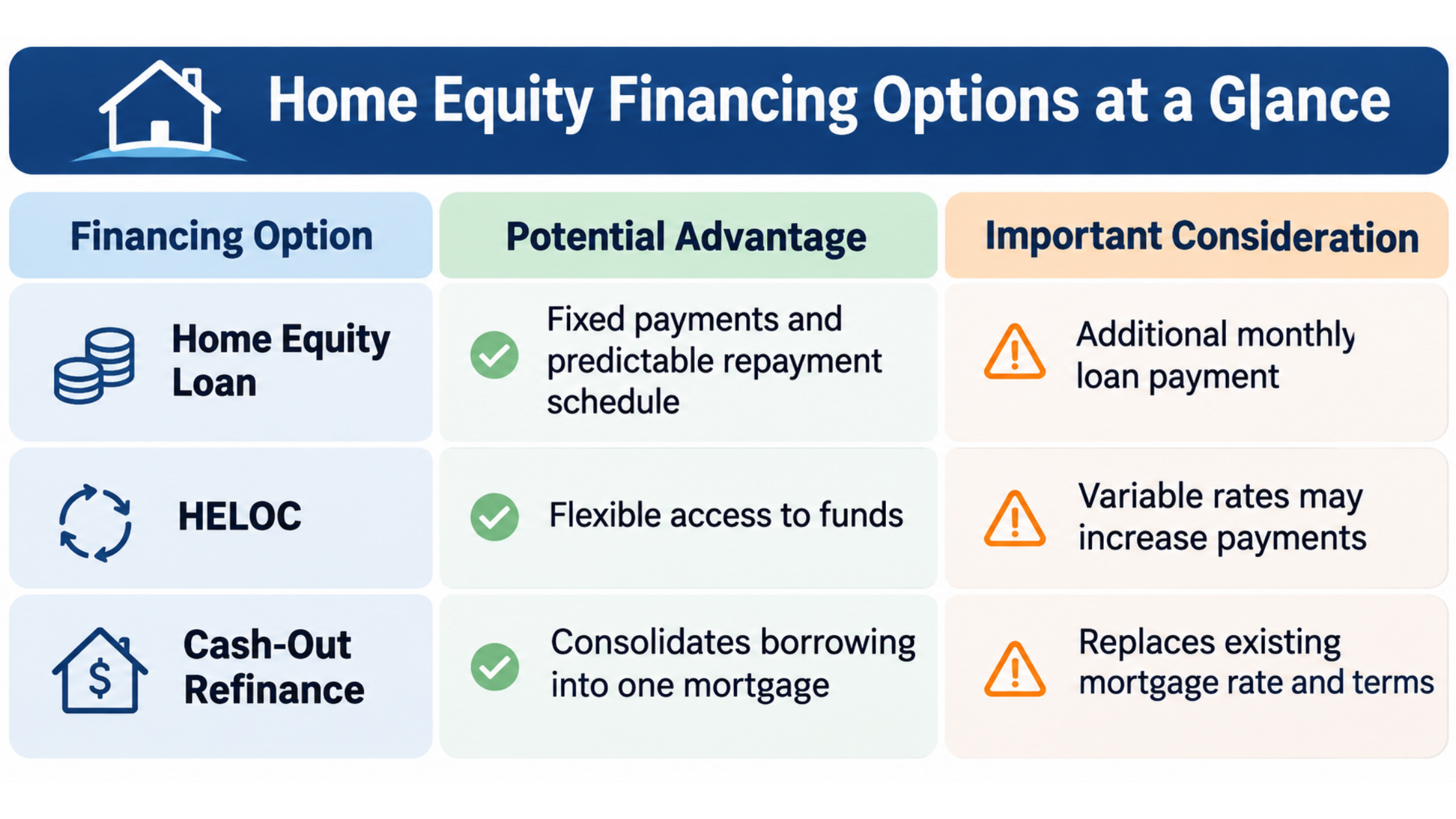
Homeowners have three common financing options for consolidating debt using home equity. Each offers different benefits and considerations depending on your financial situation. As a homeowner, you’ll want to consider the best option for your personal situation.
- Home Equity Loan: A home equity loan can provide a lump sum with fixed payments. You receive the full amount at once and then repay it over a set period, typically five to thirty years.
- Home Equity Line of Credit (HELOC): A HELOC provides homeowners with a revolving line of credit secured by the equity in their home, typically with a variable interest rate. You draw funds as needed during an agreed-upon draw period, often around ten years. During the draw period, some HELOCs allow interest-only payments, while others require payments toward both principal and interest. After this time, the repayment period begins, during which borrowers repay both principal and interest.
- Cash-Out Refinance: This option replaces your current mortgage with a larger loan and lets homeowners use the difference to pay off their debt.
Example: Consolidating $30,000 in Credit Card Debt
To show how consolidating credit card debt with home equity works, suppose a homeowner has $30,000 in credit card debt at 24% APR and consolidates it into a home equity loan at 9% APR, both repaid over five years. In this example, the credit card debt would require monthly payments of $863, with total interest of $21,782. The home equity loan would require monthly payments of $623, with total interest of $7,365. This represents $14,417 in interest savings over these five years. Keep in mind that closing costs may reduce these savings, and the home serves as collateral, creating a risk of foreclosure if you miss payments.
This example assumes fixed interest rates and equal monthly payments over five years. Actual savings depend on loan terms, fees, and the borrower’s financial circumstances.
Benefits and Risks of Home Equity Debt Consolidation
As with any financial program or loan, home equity debt consolidation has benefits and risks. The key benefit for anyone with credit card debt is the chance to lower interest rates and monthly payments, reducing financial stress for you and your loved ones. With simplified payments and predictable repayment options, many people with credit card debt find this a better option than high credit card interest rates.
On the other hand, remember the risks of home equity debt consolidation. The biggest concern for most people considering this route is that their home will serve as collateral. You should also keep in mind that closing costs and longer terms may increase total costs, and you may accumulate new credit card debt while repaying your initial credit card debt. Interest paid on home equity loans or HELOCs used to consolidate personal credit card debt generally does not qualify for the federal home mortgage interest deduction.
For Florida homeowners, rising property values may have created additional home equity that could potentially be used for debt consolidation. Whether you own a home in Tampa, Brandon, Plant City, or another Florida community, a mortgage professional can help you evaluate your available equity and compare financing options.
How to Qualify for Home Equity Debt Consolidation
To qualify for home equity debt consolidation, homeowners need to have sufficient equity in their property. Lenders will assess the loan-to-value ratio, which compares your total mortgage debt with your home’s current market value. A good credit score, stable income, and an acceptable debt-to-income ratio can help improve your approval chances and help you secure better interest rates. Lenders may require a property appraisal to determine its value and verify available equity. Additional requirements vary between each lender and may include proof of income, mortgage payment history, employment verification, and documentation of existing debts.
Steps to Consolidate Credit Card Debt
If you want to consolidate your credit card debt, follow these steps to start the process and choose the best solution.
- Calculate your credit card balances and interest rates.
- Estimate your available home equity.
- From there, you can start to compare financing options, rates, and fees.
- Once you’ve found the option that best suits your personal situation, apply for financing and pay off your credit card balances.
- Create a budget for this repayment period and beyond to avoid new debt.
Frequently Asked Questions
- Is it smart to use home equity to pay off credit cards? Using home equity to pay off credit cards may help you secure a lower interest rate and reduce your monthly payments. However, this strategy converts unsecured credit card debt into debt secured by your home, meaning you could face foreclosure if you cannot make the required payments. Additionally, extending the repayment period may increase the total interest paid, even if your monthly payment decreases.
- Can I use a HELOC to consolidate debt? Yes, you can use a HELOC to consolidate high-interest debt, including credit card balances and personal loans. They often have variable interest rates, but your home is at risk if you cannot make payments.
- How much home equity do I need? The amount of home equity you need depends on the lender, your credit score, income, and the amount of debt you want to consolidate. After you borrow, many lenders will require you to keep at least 15% to 20% equity in your home.
- Can I consolidate debt with bad credit? Yes, debt consolidation may still be possible with bad credit. You may face higher interest rates or stricter requirements, but options on offer include secured loans, credit counseling, or debt management plans.
- Will debt consolidation improve my credit score? Debt consolidation may improve your credit score over time by reducing your credit utilization and helping you make consistent payments. Applying for new credit can temporarily lower your score, and results depend on how you manage your debt after consolidation.
Explore Your Home Equity Options With My Easy Mortgage
If you’re struggling with high-interest credit card debt, using your home’s equity may provide an opportunity to consolidate balances and simplify your monthly payments.
At My Easy Mortgage, we help homeowners explore financing options that may help them manage debt more effectively. Our Florida-based team can help you compare available loan options and determine which approach may be appropriate for your financial goals.
Contact My Easy Mortgage today to discuss your home equity financing options and take the next step toward managing your debt.